This summer has been a hot one, with temperatures breaking records most days. Urban areas can experience significantly higher temperatures than the rural surroundings. These “heat islands” intensify energy demand, worsen pollution, and pose health risks. Two major causes of this phenomena include urban material properties and reduced natural landscapes in cities.
Hard, dry surfaces in urban areas, such as roofs, sidewalks, roads, buildings, and parking lots, provide less shade and moisture than natural landscapes and therefore contribute to higher temperatures. On a clear, calm night, this temperature difference can be as much as 22 degrees Fahrenheit.
Planting Shade--
Increasing tree and vegetation cover lowers surface and air temperatures by providing shade and cooling through evapotranspiration. Austin plans to reduce urban heat by planting 400,000 trees.
We challenge each Rotarian to plant two trees by the end of Rotary’s environmental month on April 30th 2024. Join a tree planting service project like Ready, Set, Plant!, a volunteer tree-planting program that plants 10,000 trees each year along Austin’s creeks and rivers. Adopt native trees well adapted to the Texas climate from a Neighborwoods event (starts in October), then partner with fellow Rotarians and other community partners and form a CommuniTree Partnership like the Rotary Club of Highland. Or make a donation to Treefolks, an organization with local roots planted way back in 1988. Every $3 donated means another tree planted in Central Texas.
Whether planting trees, picking up plastic trash, or completing other impactful environmental projects, be sure to use the iRotree app to document those acts of service. Photos Neighborwoods tree adoption event hosted in an HEB parking lot.
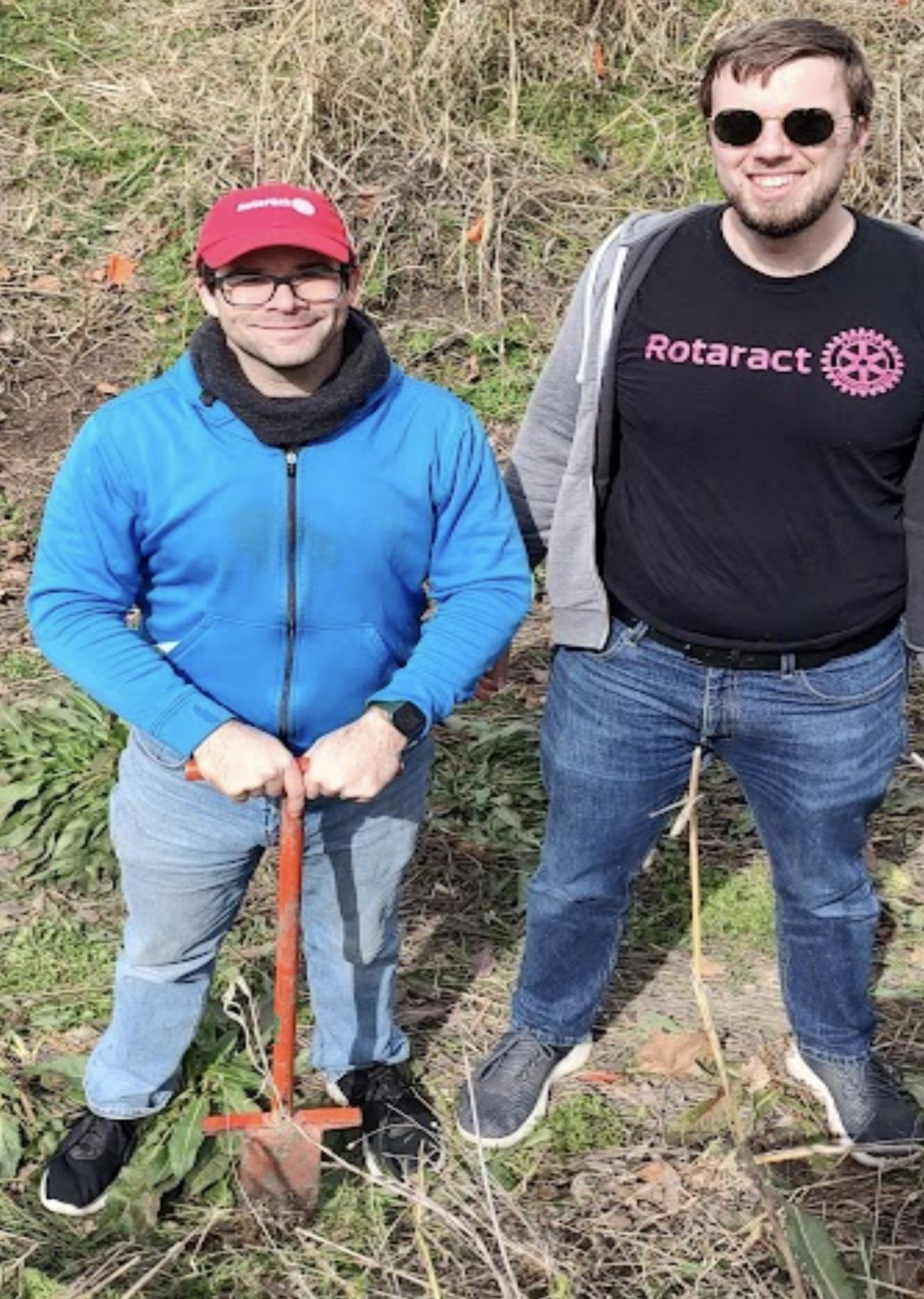
Pictured: Rotaractors Patrick Hanrahan & Bernard Williams planting trees as part of a Treefolks Ready, Set, Plant! service activity.